

Dr. Thomas Sterry, Plastic Surgeon in New York, NY, helps patients understand the many ways a modern facelift and neck lift can restore a natural, confident look. His Manhattan practice focuses on craftsmanship, safety, and subtlety. He believes the best results preserve identity while softening the markers of time. Because no two faces age in the same way, he guides each patient through the types of facelift and neck lift with clear explanations and an individualized plan. Women across the city choose him for meticulous technique, accredited settings, and a supportive voice that turns complex options into practical choices.
What Types Really Mean
When people hear the word type, they often imagine a single recipe. In facial rejuvenation, type refers to the depth of the lift, where the tissue is released, and how the incisions are placed. Some approaches focus on the superficial muscular aponeurotic system known as the SMAS. Others work in the deep plane beneath that layer to move the cheek as a unit. Neck lift types target the platysma muscle and fat compartments to refine the jawline and the angle beneath the chin. Labels can vary from surgeon to surgeon, which is why the decision is best grounded in anatomy, goals, and downtime. Dr. Thomas Sterry, Plastic Surgeon in New York, NY, emphasizes that a good plan feels tailored rather than trendy.
Aging Patterns In The Lower Face And Neck
Aging often shows first at the jawline. The cheek loses support and drifts, creating jowls and shadowing beside the mouth. The neck may show early fullness, visible bands, or a softer angle under the chin. In New York life, bright lighting, high-definition cameras, and busy schedules make these changes feel more noticeable. The aim is improvement rather than transformation. A refreshed face still looks like the patient on her best day. At consultation, photographs and a mirror are used to align priorities. Dr. Thomas Sterry explains what is realistic and how different techniques address each concern.
✓ Limited Incision Or Mini Facelift
A limited incision or mini facelift suits early changes. The incisions are shorter and typically placed around the ear with careful attention to hairlines. The work centers on the lower face where mild laxity and early jowling can benefit from support without a long recovery. The SMAS is tightened with sutures to restore definition in a subtle, elegant way. For many Manhattan professionals, this approach fits active calendars and public-facing roles because the change is polished but not obvious. It is often recommended for healthy non-smokers with good skin elasticity who want a meaningful refresh with modest downtime. Dr. Thomas Sterry plans the vector of lift and the amount of support so the face looks balanced from every angle.
✓ SMAS Plication Facelift
SMAS plication repositions the supportive layer beneath the skin using carefully placed sutures. This method is reliable for improving jowls and restoring a cleaner jawline. Incisions are concealed around the ear and may extend into the hairline depending on the degree of laxity. By gathering the SMAS rather than relying on skin tension, the result looks smoother and tends to last longer. Patients notice a steadier contour along the lower third of the face while keeping natural expressions. Dr. Thomas Sterry, Plastic Surgeon in New York, NY, uses vector-based markings to set direction and tension so that the lift supports rather than pulls.
✓ SMASectomy Or Lateral SMASectomy Facelift
In selected faces, removing a narrow strip of SMAS allows release and redraping with precision. This lateral SMASectomy targets the area that blunts the angle from cheek to jaw. The technique gives crisp definition when jowls are more pronounced yet the midface still holds reasonable volume. Incisions are similar to SMAS plication, but the planning places extra emphasis on hairline preservation and gentle tissue handling. The goal is strong lower face improvement with smooth transitions where the eye expects them. Careful hemostasis and meticulous closure support a comfortable recovery and fine scars over time.
✓ Deep Plane Facelift
A deep plane facelift works beneath the SMAS to free key retaining ligaments and lift the cheek and lower face as a single unit. This approach can be powerful for softening nasolabial shadows and restoring midface height while maintaining a soft, unoperated look. It demands expertise and precise judgment about how much release is needed. In the right candidate, the cheeks appear softly elevated, the jawline looks straighter, and the smile remains easy and natural. Dr. Thomas Sterry discusses the plan in plain language so patients understand why a deeper lift may be recommended and how recovery typically unfolds.
✓ Hybrid Facelift Approaches
Faces are not uniform, so techniques do not need to be either. Hybrid plans combine elements of SMAS and deep plane lifting to balance power with elegance. For example, the lower face may benefit from SMAS plication while the midface receives selective deep plane releases. The result is a tailored lift that addresses the areas that matter most without treating what does not need to be changed. Dr. Thomas Sterry, Plastic Surgeon in New York, NY, prioritizes anatomy first and trends second, guiding patients toward the method that serves their features and schedule.
Neck Lift Types – The Foundation
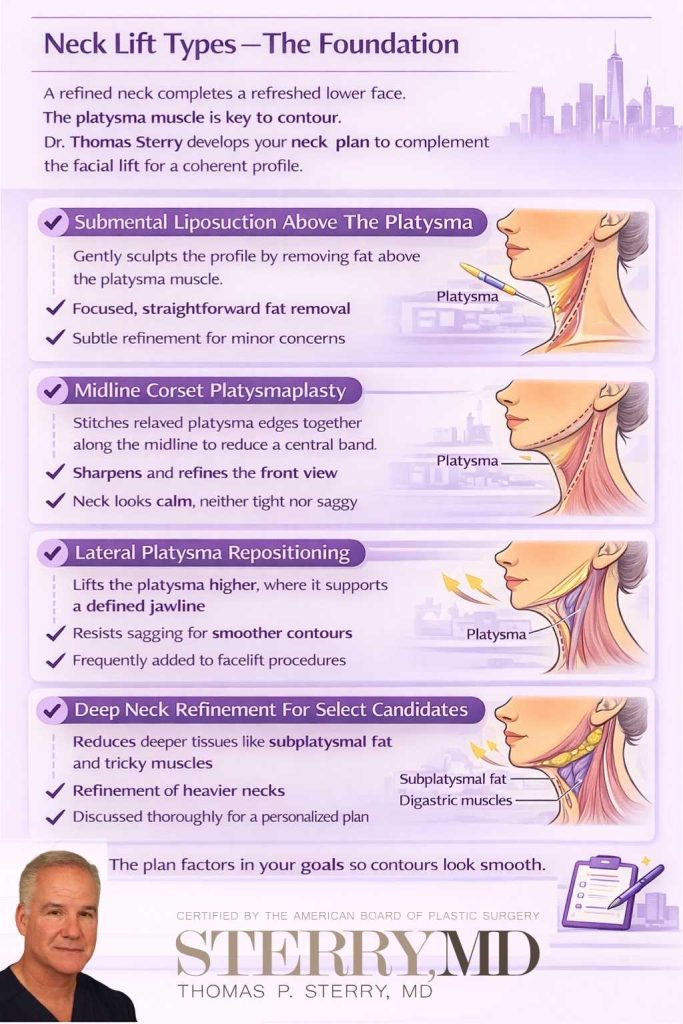
A refined neck completes a refreshed lower face. The platysma muscle is central to contour, acting like a sheet beneath the skin that can separate and form bands. Neck lift planning considers this muscle along with fat compartments above and below it. Many facelifts include neck maneuvers for harmony because a tight face above a lax neck looks mismatched. In his Manhattan practice, Dr. Thomas Sterry designs the neck plan to complement the facial lift so that the profile looks coherent from every angle.
✓ Submental Liposuction Above The Platysma
Some patients have early fullness beneath the chin driven by fat above the platysma. In those cases, careful liposuction through a small incision can restore definition without more extensive surgery. It works best when the skin is resilient and bands are minimal. Manhattan patients often notice that such focused changes show up strongly on video calls and in photos. When bands or deeper issues are present, liposuction alone may not be enough, and additional steps are added for balance.
✓ Midline Corset Platysmaplasty
When the edges of the platysma splay apart, a central band can appear. Midline corset platysmaplasty stitches those edges together to smooth and sharpen the cervicomental angle. This maneuver improves the front view and the slight shadow under the chin. It often pairs with lateral support and targeted fat work, producing a neck that looks calm and youthful rather than tight. Dr. Thomas Sterry explains how this step integrates with the facial lift so the entire lower face reads as one harmonious line.
✓ Lateral Platysma Repositioning
Lateral platysma repositioning supports the jawline by securing the muscle where it can resist downward pull. The effect is a defined mandibular border and a reduction in the fall-off that creates jowls. For patients who want a confident neckline in photography and day-to-day life, this step can be essential. It is frequently combined with facial lifting so the jawline, chin, and upper neck form a smooth arc. Attention to vector and gentle handling help maintain a natural curve at rest and in motion.
✓ Deep Neck Refinement For Select Candidates
Some necks remain heavy even when surface fat is removed and the platysma is tightened. In those cases, deeper contributors such as subplatysmal fat or muscular prominence can be addressed. This work requires careful selection and thorough counseling, but when indicated it can dramatically enhance the neck angle and highlight the jawline. Patients who have always had a thicker neck despite fitness often appreciate how this refinement completes their result. Dr. Thomas Sterry, Plastic Surgeon in New York, NY, discusses the trade offs and healing course so expectations stay aligned with the plan.
Incision Strategy And Scar Placement
Incisions are designed to hide in natural curves and hair patterns. Around the ear, they tuck into creases that the eye tends to ignore. In the hairline, they follow growth direction to preserve styling options. A tiny incision under the chin may be used for neck work. Fine suturing, gentle dressings, and guided scar care support elegant healing in the months that follow. As scars mature and soften, confidence grows. Dr. Thomas Sterry counsels patients on hairstyles and makeup strategies that make the early weeks simple and private.
Anesthesia And Setting
Safety begins with the setting. Procedures are performed in accredited environments in Manhattan with experienced anesthesia teams. The plan for anesthesia is based on the surgical approach and the patient’s health profile. The day is calm and predictable with preoperative markings, final goal review, and standardized safety checks. Clear communication continues from operating room to recovery to the first night at home. Patients leave with written instructions and a direct line for questions so help never feels far away.
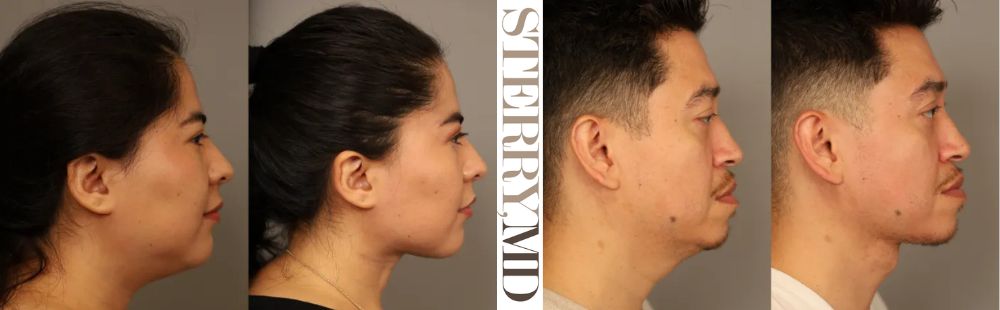
Facelift Before and After Photos
Recovery Milestones By Type
Healing is a process, not an event. Limited incision lifts usually allow quick return to desk work. SMAS plication or SMASectomy lifts often feel presentable after one to two weeks, with steady refinement after that. Deep plane and hybrid lifts may add a few days to the early window, but the benefits emerge steadily as swelling recedes and tissues relax into their new support. Neck maneuvers respond to elevation, rest, and gentle protection. In New York, many patients plan around on-camera meetings and events. Dr. Thomas Sterry helps map dates so privacy and confidence stay intact during recovery.
What Makes Results Look Natural
Natural results come from supporting structure beneath the skin rather than pulling the skin itself. The vectors of lift follow the directions that youth once provided, so expressions remain easy and familiar. Face and neck are blended so the profile looks coherent from every angle. Small lifestyle choices matter too. Good skin care, sun protection, and healthy habits extend benefits while scars mature. The goal is for friends to notice that the patient looks rested and well without being able to name why.
Who Is A Good Candidate In New York, NY
Ideal candidates are healthy, motivated, and ready for realistic improvement. Non-smokers with stable weight and flexible schedules tend to heal more smoothly. Younger patients with early change may suit limited incision lifts. Those with more pronounced laxity or midface descent may benefit from SMAS, deep plane, or hybrid plans combined with neck work. Diversity matters in a city like New York, so plans are tailored for different skin types, hair patterns, and facial features. Dr. Thomas Sterry, Plastic Surgeon in New York, NY, evaluates lifestyle and timing to protect privacy at every step.
Choosing Between Types – A Simple Path
Start with priorities. If the concern is mainly jawline and jowls, SMAS-based strategies may be ideal. If the cheek has lost height and the midface looks heavy, a deep plane approach can restore softness and light. If both areas need attention, a hybrid plan may deliver balance. The neck plan is layered on top of that choice, whether it is liposuction above the platysma, a midline corset, lateral support, or deeper refinement. Calendar planning happens next so the recovery fits life, not the other way around.
Risks And How Dr. Sterry Minimizes Them
Every operation carries risk, but thoughtful steps reduce problems. Planning aims to avoid avoidable issues. In surgery, gentle tissue handling, precise hemostasis, and careful temperature and blood pressure control support smooth healing. After surgery, clear instructions, direct contact, and proactive follow-up help small concerns stay small. Dr. Thomas Sterry believes that safety is a culture, not a checklist, and that culture shapes every decision from consultation to final visit.
Longevity And Maintenance
The durability of a result depends on technique, tissue quality, and lifestyle. Deep plane and comprehensive SMAS approaches can offer longer-lived midface benefits, while mini lifts suit early aging and may need refreshers over time. Neck lift results last longer when weight is stable and sun protection is routine. Skin care and well-chosen nonsurgical treatments can maintain polish without changing the natural look the surgery created. Dr. Thomas Sterry, Plastic Surgeon in New York, NY, tailors maintenance so results continue to feel like the patient at her best.
Life In New York – Timing The Procedure
Seasonal rhythms matter. Many patients choose winter or early spring for discreet downtime, while others align with school breaks or work cycles. Consider commute logistics, support at home, and the timing of high-profile events. Manhattan patients appreciate precise scheduling and predictable updates. The practice coordinates with real life so healing feels organized and private.
What To Bring To Your Consultation
Preparation makes a good visit great. A short list of priorities helps focus the conversation. Health history and medications allow the team to plan safely. Photos from a time when the patient felt most like herself provide a visual reference. A calendar with key dates sets a clear recovery path. Dr. Thomas Sterry and his team create a calm environment where questions are welcomed and next steps are simple.
How Dr. Sterry’s Process Feels
Care should feel calm and respectful from the first call to the final photo. Patients receive third-person updates that keep them oriented during the process. The team anticipates needs and checks in consistently. The experience is designed to be organized and reassuring so confidence builds as healing unfolds. Many patients describe feeling both supported and in control.
Reasons Patients Choose Dr. Thomas Sterry
Patients choose Dr. Thomas Sterry, Plastic Surgeon in New York, NY, for his board-certified expertise, natural results, and Manhattan location with accredited settings. They value his honest guidance, refined technique, and the way he listens. They also appreciate that the practice respects busy lives and provides clear education from consultation through recovery. The result is a partnership focused on safety, beauty, and authenticity. Many patients mention that they felt understood from the first meeting and that the entire experience felt calm and organized. That trust carries into the operating room and through each follow-up.

FAQs About Different Types Of Facelift And Neck Lift
Which facelift type fits a busy Manhattan schedule best?
A limited incision or mini facelift often aligns with active calendars because the incisions are shorter and the lift focuses on early changes along the jawline. Many patients feel ready for desk work in about one to two weeks. Dr. Thomas Sterry, Plastic Surgeon in New York, NY, reviews event dates, commute needs, and visibility on camera to shape a plan that protects privacy while still delivering meaningful improvement. He also outlines wardrobe and hairstyle options that make the early window feel effortless.
How does Dr. Thomas Sterry decide between SMAS and deep plane for me?
The choice comes from anatomy and goals. If the main concern is jowls and the lower third, SMAS-based strategies can define the jawline with precision. If the cheeks have descended and the midface looks heavy, a deep plane approach may restore height and softness. During consultation he maps vectors, evaluates skin and SMAS quality, reviews prior treatments such as fillers, and explains why one path fits better than another. The decision feels collaborative and grounded in how you want to look in real life, not just in photos.
If my neck has bands but my face looks fine, can I choose a neck-focused plan?
Yes, a neck-focused plan can be designed when the face shows fewer changes. Options may include submental liposuction above the platysma, a midline corset platysmaplasty for bands, and lateral platysma support for the jawline. Dr. Thomas Sterry still checks facial balance so the neck and lower face look harmonious in photos and in motion. He also discusses how posture, fitness, and skin care influence the final look over time.
Will a hybrid facelift look obvious on video calls?
Hybrid plans are created to look natural, not obvious. By combining SMAS support in the lower face with selective deep plane releases in the midface, the result reads as rested and authentic on screen. Patients in New York often report that colleagues notice they look well without guessing why. Technique is matched to expression patterns so smiles stay easy and familiar. Camera tests in the office can help patients see how subtle adjustments translate to everyday life.
What if I have a thicker or lifelong full neck – are deeper neck steps an option?
For select candidates, deeper contributors can be addressed when surface fat removal and platysma tightening are not enough. This may include careful work on deeper fat or muscular prominence. Dr. Thomas Sterry, Plastic Surgeon in New York, NY, discusses trade-offs, healing, and how these steps can sharpen the cervicomental angle for a profile that finally matches effort and lifestyle. He reviews photographs that show what changes are likely and sets clear expectations for the first few weeks.
Can previous fillers change which facelift type he recommends?
Yes, long-term fillers can alter tissue feel and the way planes move. During consultation he evaluates where product sits and how it affects lift planning. In some cases, dissolving selected areas before surgery improves precision and helps the lifted tissues settle smoothly. The goal is a clean foundation that supports natural movement and subtle light reflection. Patients are reassured that the plan prioritizes softness and expression rather than stiffness.
How soon can I attend a New York event without giving away I had surgery?
Many patients feel presentable around 10 to 14 days after SMAS or hybrid lifts, with makeup, hairstyling, and wardrobe helping in the early window. Deep plane approaches may need extra days. Scar placement, gentle swelling, and lighting all influence how things read on camera. Dr. Thomas Sterry provides a calendar plan, appearance tips, and check in visits so the return to public settings feels confident and controlled.
Final Steps
If you are exploring the different types of facelift and neck lift surgery and want a plan that fits your features and your life, request a private consultation with Dr. Thomas Sterry in New York, NY. His team will help you map the right approach, the right timing, and the right support so you look like yourself – simply refreshed.
Further Reading
- Read more about Lower Facelift
- Read more about Chin Augmentation
- Read more about Buccal Fat Removal
- Read Dr Sterry’s Blog on Neck Liposuction vs. Neck Lift Surgery: Which Is Right for You?
- Read Dr Sterry’s Blog on What Is the Best Age for a Neck Lift?
- Read Dr Sterry’s Blog on Facelift Philosophy and Technique
- Read Dr Sterry’s Blog on Don’t all Facelifts look fake?
Medical References
- Current Trends in Facelift and Necklift Procedures – Journal of Clinical Medicine – https://pmc.ncbi.nlm.nih.gov/articles/PMC12193931/
- Current Trends in Facelift and Necklift Procedures – Journal of Clinical Medicine – https://pubmed.ncbi.nlm.nih.gov/40566019/
- Open Neck Lift: Surgical Technique and A Clinical Classification for Cervical Rejuvenation – Facial Plastic Surgery – https://pubmed.ncbi.nlm.nih.gov/39038498/
- Revision Facelift and Neck Lift – Facial Plastic Surgery Clinics of North America – https://pmc.ncbi.nlm.nih.gov/articles/PMC8186989/
- A Descriptive Review of Contemporary Facelift Techniques and Complications – Facial Plastic Surgery – https://journals.sagepub.com/doi/10.1177/07488068251396413
- Facelift Part I: History, Anatomy, and Clinical Assessment – Aesthetic Surgery Journal – https://academic.oup.com/asj/article/40/1/1/5370568
- Aesthetic Surgery of the Face and Neck – Aesthetic Surgery Journal – https://academic.oup.com/asj/article-abstract/29/6/449/209934

Leave a Reply