

Returning to movement after surgery is more than a schedule on paper. It is the bridge between how you feel today and how you want to live tomorrow. Board certified Plastic Surgeon Dr Thomas Sterry in New York, NY guides that bridge with a calm, methodical plan that protects healing and preserves elegant results. His Manhattan practice favors natural outcomes, straight talk, and a stepwise approach that fits real life in the city. The aim is simple and powerful at the same time. Recover with confidence and return to the routines you love without risking what you just achieved. With clear rules and steady coaching, patients feel seen, supported, and sure of their next move.
Why Exercise Timing Matters After A Facelift
A facelift in NYC restores a clean jawline and a smoother lower face by supporting deeper layers and then redraping the skin with care. In the first days after surgery, tiny blood vessels are closing and delicate tissues are adapting to their refreshed position. These structures are vulnerable to abrupt changes in pressure. Intense cardio, heavy lifting, and forceful straining can drive blood pressure spikes that push fluid into healing spaces and make bruising or bleeding more likely. Heat and head below heart positions can also send blood toward the face and worsen swelling. Choosing patience during this window is not only wise but strategic. It helps scars mature more pleasingly, shortens the period of visible swelling, and protects the refined work of Dr Sterry so your refreshed look reads as effortless rather than obvious.
New York adds its own layer. Stairs, subways, and brisk sidewalks can turn daily life into an unintended workout. A plan that respects the pace of the city reduces stress and lowers risk. Dr Thomas Sterry teaches patients to replace urgency with intention. That simple mindset shift is often the difference between a smooth facelift recovery and a frustrating stop and start pattern.
Meet The Guide: Dr Thomas Sterry’s Approach In NYC
Dr Thomas Sterry is a board certified Plastic Surgeon in New York, NY known for natural facelift results that honor personal identity. His style is personal and precise. Patients appreciate direct timelines, clear rules, and guidance that fits Manhattan routines. He believes safety and beauty travel together. He sets expectations with kindness and candor. He champions simple instructions that remove guesswork so patients can focus on feeling better. The promise is consistent. Safety comes first. Craftsmanship matters. Movement returns in a way that supports the result rather than risking it. At follow up visits he studies small details like skin tone, incision calmness, and facial symmetry while asking practical questions about stairs, errands, and energy. That blend of artistry and pragmatism shapes a plan that feels realistic and reassuring.
The Exercise After Facelift Roadmap – Week By Week
Recovery is individual, but a thoughtful framework helps. Dr Thomas Sterry offers the following roadmap as a common starting point that he personalizes at each visit. It reads like coaching because it is coaching.
✓ Day 0 To 2 – Reset And Protect
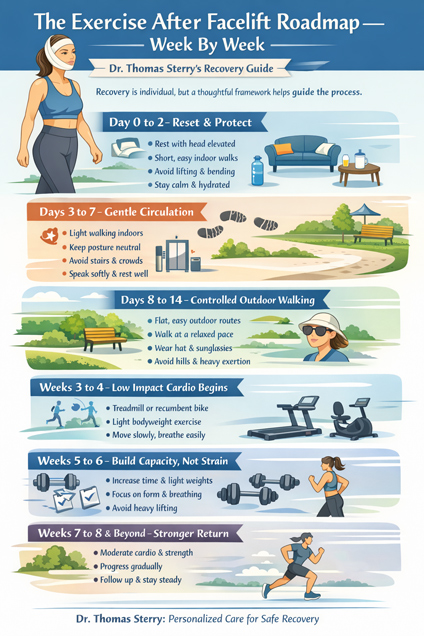
These are foundation days. Keep your head elevated when resting and sleeping to minimize facial congestion. Take short, easy indoor walks every one to two hours while awake to promote circulation without effort. Avoid lifting anything heavier than a small grocery bag. Skip bending to the floor, deep cleaning, or any household task that makes you hold your breath. Keep the room comfortable and cool. Hydrate often. Breathe slowly and evenly. The aim is calm blood pressure and gentle motion. Quiet routines help here. Prepare simple meals, use voice messages instead of long phone calls, and keep screens low to avoid craning the neck. If you live alone, schedule a daily check in with a friend so support is built in without rushing.
✓ Days 3 To 7 – Gentle Circulation
Light walking remains the mainstay. Around the apartment, down the hallway, or through the lobby, choose brief loops that feel comfortable. Keep your posture tall and your neck neutral. Avoid sweating. Speak softly and keep conversations short so you do not strain your neck or face. Continue to sleep propped up and keep movements smooth. If your building has an elevator, use it rather than treating stairs as exercise. Plan errands when the city is quieter so you are not weaving through crowds. Ask for help with carrying or lifting. Small choices pay dividends. Many Manhattan patients find it helpful to set a gentle step target that is easy to reach without pressure.
✓ Days 8 To 14 – Controlled Outdoor Walking
Flat routes outdoors are welcome. Walk at a conversational pace that allows easy nasal breathing and full sentences without effort. Choose sidewalks and park paths that are level and uncrowded. Treat stairs as necessary transportation only and take them slowly. Skip hills, intervals, and any format that raises your heart rate quickly. Continue to avoid heated studios or warm environments that can prolong swelling. Energy can fluctuate during this week, so pair shorter outings with generous rest. A light scarf or hat can add privacy if you feel self conscious, and sunglasses protect sensitive skin from wind. If pollen or cold air triggers sneezing or coughing, reroute indoors so the neck and face remain relaxed.
✓ Weeks 3 To 4 – Low Impact Cardio Begins
By now many patients are ready for gentle machines and light bodyweight movements. Flat treadmill walking or a recumbent bike are common choices because they feel smooth and do not jar the neck. An elliptical on the easiest setting can be appropriate if it does not create facial pressure. Keep effort below the point where you would start to puff. Extend session length before you increase intensity. Simple lower body work such as sit to stand from a chair, short step ups, or relaxed calf raises can help you feel strong again as long as the face remains calm. Stop if you notice throbbing or pressure. Exhale through every effort so you never hold your breath. If you prefer guided settings, choose a cool studio with beginner options and tell the instructor you are returning after surgery so pacing is gentle.
✓ Weeks 5 To 6 – Build Capacity Not Strain
This is the time to expand duration and gently explore resistance. Add minutes to cardio sessions in small amounts and watch for how your face feels later in the day. When you reintroduce resistance, start with bands or very light weights for high repetitions. Move slowly and deliberately. Avoid inverted poses and heavy compound lifts that demand bracing. Keep sessions in cool, well ventilated spaces. Continue to prioritize form and breathing. If you notice swelling that appears later or a sense of pressure around the incisions, scale back the next session rather than pushing through. Many patients find a rhythm of one day of gentle strength followed by one day of light cardio works well during this phase.
✓ Weeks 7 To 8 And Beyond – Stronger Return
Most routines begin to feel normal again by this point if bruising and swelling have settled. Moderate cardio is reasonable for many patients. Strength work can progress gradually while maintaining strict exhalation during effort. Personal records, sprints, or heavy lifts should wait until roughly ten to twelve weeks. If you had combined procedures such as additional neck work or fat grafting, expect to follow the slower end of the range. Dr Thomas Sterry reassesses your plan at follow up and adjusts it to the specifics of your healing so that pacing remains safe and momentum stays positive. It is common to feel a renewed excitement for movement here. Keep the mindset steady and build in small steps so the result continues to improve.
What To Avoid And Why
Heavy lifting and forceful straining cause abrupt spikes in blood pressure. During early healing these surges can force blood into fresh tissue planes and increase the risk of bleeding or a surge in swelling. High heat is a common but underappreciated trigger. Saunas, steam rooms, and hot yoga can dilate blood vessels and keep the face puffy longer. Inversions and head below heart positions increase venous pressure in the face and can worsen congestion. High impact or contact activities carry the risk of accidental bumps to the cheeks or incisions which is the last thing anyone wants after careful facial work. Breath holding is the hidden culprit inside many movements. It is easy to do and hard to notice. The fix is simple and powerful. Exhale through effort every time and keep the jaw relaxed.
Personalization With A Manhattan Plastic Surgeon
No two recoveries are identical. Age, overall health, blood pressure trends, fitness history, and personal goals all influence pacing. Procedure details matter as well. A comprehensive facelift carries different demands than a mini facelift approach, and the addition of focused neck work changes the calculus again. Medications and lifestyle choices require a tailored approach. Blood thinners, supplements, and pain control strategies can affect timing, just as nicotine and vaping can undermine healing. Sleep, stress, hydration, and commute patterns fit into the plan because they influence energy and pressure responses.
Dr Thomas Sterry takes these variables into account and tunes the timeline accordingly. If swelling lingers or blood pressure runs high, he slows the progression. If early signs look calm, he may green light a slightly faster return. He also invites patients to bring questions about specific classes or gym equipment so he can approve or modify a routine in real time. The shared objective remains the same. Make steady gains while protecting the result and your comfort.
The New York, NY Lifestyle – Staying Active Without Working Out
City life is full of movement even when you are not trying to exercise. Planning ahead turns that movement into an asset rather than a liability. For walk up buildings, coordinate help in the first couple of weeks so that someone else can manage heavy bags or unexpected tasks. When stairs are unavoidable, climb slowly with pauses on landings and focus on relaxed breathing. On subways and streets, leave early so that you never have to sprint. Choose flatter routes and use benches for short rests. Let the crowd pass you. Set your pace and keep it. For dog walking and errands, stick to short flat loops and ask a friend to handle pulling or lifting until your surgeon clears you. On quieter days at home, simple seated mobility, ankle pumps, and shoulder rolls keep circulation moving without taxing the face.
When you return to a studio or gym, select cooler rooms with good airflow and begin with the most introductory level. Tell the instructor that you are recovering so expectations are aligned. A water bottle and a plan to leave early if needed make the first sessions feel safe and successful. Many New Yorkers enjoy Central Park and the East River paths. During recovery, favor the flatter sections and quieter times of day to avoid the rolling efforts and crowds that can push intensity higher than planned.
Red Flags – When To Pause And Call The Office
Pay close attention to how your face feels during and after activity. One sided swelling that appears or grows quickly deserves immediate attention. A tight band like pain, a new or expanding bruise, or a headache that starts with effort are all signals to stop. Throbbing around the incisions is another sign to back down and check in. If any of these occur, stop the activity, note the time and what you were doing, rest with your head elevated, and contact the practice for guidance. In New York, NY help is close at hand and questions are encouraged. Quick conversations prevent bigger issues. You are never an inconvenience for reaching out. This responsive communication is a hallmark of care with Dr Thomas Sterry and his team.
Building Confidence Week By Week
Mindset matters. Favor progress over perfection and consistency over intensity. Listen for early signs and course correct quickly. Simple tracking tools help many patients. A short activity log that records time, perceived effort, and how you felt later creates a feedback loop you can trust. A private photo journal can document swelling trends so you can see improvements that are hard to notice day to day. Gentle step goals work well in the city because they recognize that life already includes movement.
Celebrate the right milestones. That first outdoor walk that feels easy. The first week when afternoon puffiness stays quiet. The first gym visit that feels surprisingly normal. The moment when you look in the mirror and see yourself again with a smoother jawline and a rested expression. Follow up visits play an important role. Incisions are checked, photos are updated, and the plan is refined. Dr Thomas Sterry, Plastic Surgeon in New York, NY, provides personalized green lights that take the guesswork out of the next step. Patients often say that these small approvals feel like mile markers that turn uncertainty into confidence.
Practical Planning Before Surgery
Preparation makes facelift recovery smoother. Start with your home environment. Extra pillows allow comfortable head elevation. Keep a small side table stocked with water, medications, lip balm, and other essentials so you are not bending or reaching for what you need. Dim lighting and a calm room make rest easier. Map walk friendly routes near home with flat paths and convenient resting spots so you do not have to invent them later. Consider elevator access in the buildings you visit most often so you can avoid strenuous stair climbing in the first two weeks.
Plan your wardrobe with front closing tops and supportive sneakers that are easy to put on. A light scarf or hat can provide privacy for early strolls. Use a small crossbody bag to keep hands free and prevent shoulder strain. Set up your support system in advance. Ask a friend to help with dog walking or groceries for the first couple of weeks. Arrange rideshare travel for appointments so you do not have to navigate complex routes right away. Clear calendar space so your schedule has room to flex. These preparations sound simple, and they are, but they add up to less strain and smoother momentum.
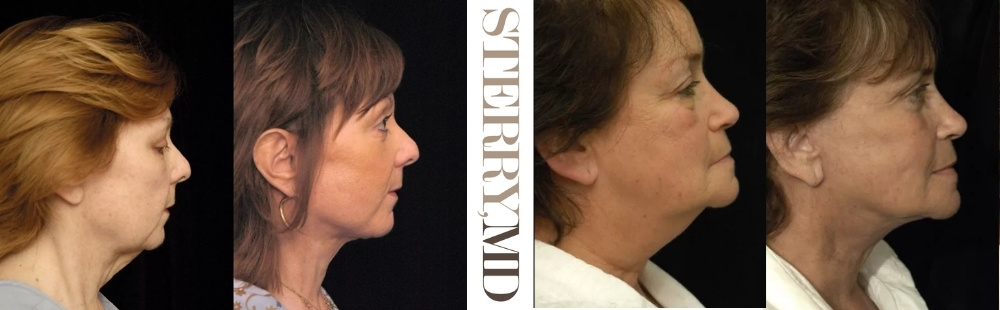
Facelift Before and After Photos
Smart Progression Back To Strength
The order of operations matters. First walking, then low impact cardio, then light resistance, and finally a return to regular training. Time comes before intensity and quality before quantity. Breathing and posture are constant companions. Exhale during effort, avoid breath holding, keep the neck long and the jaw soft, and let the shoulders rest. If the face starts to feel tight or heavy, scale back. Early sessions might look like twenty to thirty minutes of flat walking at an easy pace or a blend of recumbent bike and gentle treadmill work. Bodyweight sit to stand sets performed slowly with pauses and relaxed breathing restore confidence without provoking pressure.
A no go session is easy to identify. It includes hills, sprints, intervals, hot rooms, crowded classes, heavy lifts, or core moves that demand bracing. It produces throbbing, pulsing, or new swelling. When in doubt, pivot to a calmer alternative and check in with the office. The first goal is continuity. Once consistency is easy, intensity can grow again, and it grows faster than most people expect when the groundwork is solid.
Nutrition, Hydration, And Sleep That Support Movement
Hydration underpins recovery. Keep water nearby and sip often. Limit alcohol while healing so that sleep and swelling stay on track. Build each meal around lean protein to support tissue repair and add colorful fruits and vegetables for a broad range of nutrients. Choose gentle, fiber rich options that are comfortable during the first weeks. Protect sleep as if it were part of your prescription. Keep a regular bedtime, a cool dark room, and head elevation as directed. Start mornings quietly before walks so the day opens with calm rather than urgency. Treat caffeine with respect. Use it lightly and avoid pre workout stimulants early on. Favor steady energy over spikes so that your nervous system remains settled while tissues are healing.
Tailored Advice By Age And Fitness Level
Women in their twenties and thirties often bounce back quickly, but their preferred workouts tend to be intense. Holding back longer than expected usually pays off with smoother healing and less frustration. Focus on form and pacing rather than speed. In the forties and fifties, life is busy and recovery needs to fit real schedules. Steady walks, light resistance, and serious attention to sleep quality make the biggest difference. In the sixties and seventies, joint protection and balance come to the forefront. Short, frequent walks are often the best foundation. Blood pressure monitoring and regular check ins with the care team keep the plan safe. Across all ages the principle is the same. Progress is individual and should feel calm.
Common NYC Scenarios And Simple Solutions
The fast sidewalk surge is a daily reality in Manhattan. The solution is to let the crowd flow around you while you maintain your pace and your breathing. The subway sprint temptation can be strong, especially when doors are closing. Skip the sprint. Wait for the next train. Take stairs slowly with a hand on the rail or use the elevator when available. Boutique class invitations are common among friends. Choose a cool room and the most basic level at first. Tell the instructor you are returning after surgery and leave early if needed. For dogs who pull, keep routes short and flat. Ask for help during the first two to three weeks and use treats to encourage calm walking. Small strategies like these keep momentum without risk.
How The Practice Supports You
Support at the practice begins with clear instructions delivered both in writing and in person. Checklists and timelines translate complex recovery science into steps that are easy to follow. Direct contact information makes questions simple to ask. Follow up is designed around your schedule with in person visits in New York, NY and photo check ins when appropriate. Adjustments to the plan happen quickly as healing unfolds. The partnership with Dr Thomas Sterry, Plastic Surgeon, continues throughout recovery. He monitors progress, celebrates milestones, and keeps the path back to strength steady and safe. Patients value this consistency because it transforms a long recovery into a series of manageable steps.
Key Takeaways For A Strong And Safe Return To Exercise
Protect the first two weeks because they set the tone for healing. Walk early, but keep it easy and steady. Add cardio before resistance and always exhale during effort. Avoid heat, inversions, and heavy lifts until the time is right. Call promptly if anything feels wrong. In New York, NY city life provides built in steps, so choose routes and routines that match recovery rather than testing it. With a clear plan and consistent guidance, momentum builds quickly without jeopardizing the outcome. Patients who work with Dr Thomas Sterry often describe feeling both cared for and in control, which is exactly what recovery should feel like.
FAQs About Exercise After A Facelift
Can I safely use the subway in the first two weeks if I avoid the stairs?
Riding is fine when you feel steady, but the sprint to the platform is not. Choose stations with elevators, arrive early, and wait for the next train if crowds build. Stand near a door for space and hold a rail so you are not jostled. If the trip requires long stairways, consider a rideshare until week two or three. Keep a scarf handy in case cool air makes your face feel tight so you can cover and relax.
I live in a walk up in New York – how do I handle groceries and daily trips without overdoing it?
Plan deliveries for the first two weeks and ask a friend or concierge to carry bags upstairs. When stairs are unavoidable, take them slowly with pauses on landings and keep breathing relaxed. Use multiple small trips instead of one heavy climb. If you feel facial pressure or pulsing, stop and rest with your head elevated once home. Tell helpers to set items at counter height so you avoid repeated bending.
Is it okay to walk in Central Park during week two or will hills on the loops be too much?
Flat paths are the goal at that stage. Choose reservoir or mall sections that are level and uncrowded. Keep an easy, conversational pace and skip the rolling loops until weeks three to four. If wind or pollen makes you sneeze or strain, pick a different route or move the session indoors. A short museum walk can be a nice alternative that stays flat and climate controlled.
My gym offers hot yoga and heated cycling – when can I return to warm studios in NYC?
Heat promotes vasodilation and can prolong swelling, especially early. Stick with cool rooms that have good airflow through the first month. When you return to studios, select the lowest intensity options first and leave early if you notice facial fullness. Heated formats should wait until your surgeon clears you and your face feels consistently calm. Ask the front desk which classes are the coolest and least crowded so you can ease in.
Do wearable heart rate alerts help me stay in a safe zone after surgery?
They can be useful as gentle guardrails. Set a low alert during weeks two to four so you avoid creeping into higher intensity. Pair the data with body feedback. If you can speak in full sentences and feel no facial pressure, you are likely in the right range. If throbbing appears despite a modest heart rate, back down and shorten the session. Use the notes feature in your device to record which routes or classes felt best.
What should I do if a friend invites me to a boutique class and I do not want to miss out?
Ask if there is a beginner version in a cool room. Let the instructor know you are returning after surgery and plan a shorter stay. Choose movements that keep your neck neutral and avoid breath holding. Stand near an exit so you can step out early without disrupting the class. Social connection matters, but pacing matters more. Share your green light date with friends so they know when higher intensity will be back on the table.
Dog walking is part of my routine – how do I keep it safe in a busy Manhattan neighborhood?
Pick short, flat loops during the first weeks and avoid crowded blocks where sudden pulls are common. Use a harness that limits tugging and ask a friend or service to handle stronger walks until you feel fully steady. If facial throbbing, swelling, or pressure shows up after a loop, scale back distance next time and call the office if symptoms persist. Early caution with pets pays off quickly when healing reaches a steady, quiet rhythm.
Book Your Private Consultation In New York, NY
If you are planning a facelift in NYC and want a safe return to exercise tailored to your life, connect with Dr Thomas Sterry, board certified Plastic Surgeon in New York, NY. Request a private consultation in Manhattan to discuss your goals, review your routine, and receive a personalized movement roadmap that protects healing and supports lasting, natural looking results.
Medical References
- Current Trends in Facelift and Necklift Procedures / Journal of Clinical Medicine – NIH PMC https://pmc.ncbi.nlm.nih.gov/articles/PMC12193931/
- Evaluating the Effectiveness of the High-SMAS Facelift Technique / Aesthetic Plastic Surgery – NIH PubMed https://pubmed.ncbi.nlm.nih.gov/39020030/
- A Systematic Review and Comparative Analysis of Reconstructive Rhytidectomy / Cureus – NIH PMC https://pmc.ncbi.nlm.nih.gov/articles/PMC11539935/
- Hemostatic Nets in Facelifts: A Systematic Review and Meta-analysis / Aesthetic Surgery Journal Open Forum – Oxford Academic https://academic.oup.com/asjopenforum/article/doi/10.1093/asjof/ojaf082/8176837
- Increasing Superficial Musculoaponeurotic System Manipulation in Rhytidectomy / NIH PMC https://pmc.ncbi.nlm.nih.gov/articles/PMC12658321/
Further Reading
- Read more about Naturalift™ Mini Facelift
- Read more about Lower Facelift
- Read more about Deep Plane Facelift in NYC
- Read Dr Sterry’s Blog on Don’t All Facelifts Look Fake?
- Read Dr Sterry’s Blog on Your Complete Guide to the Lower Facelift
- Read Dr Sterry’s Blog on Male Neck Lift Options
- Read Dr Sterry’s Blog on Sagging Neck Solutions: Neck Lift vs Liposuction vs Kybella

Leave a Reply