
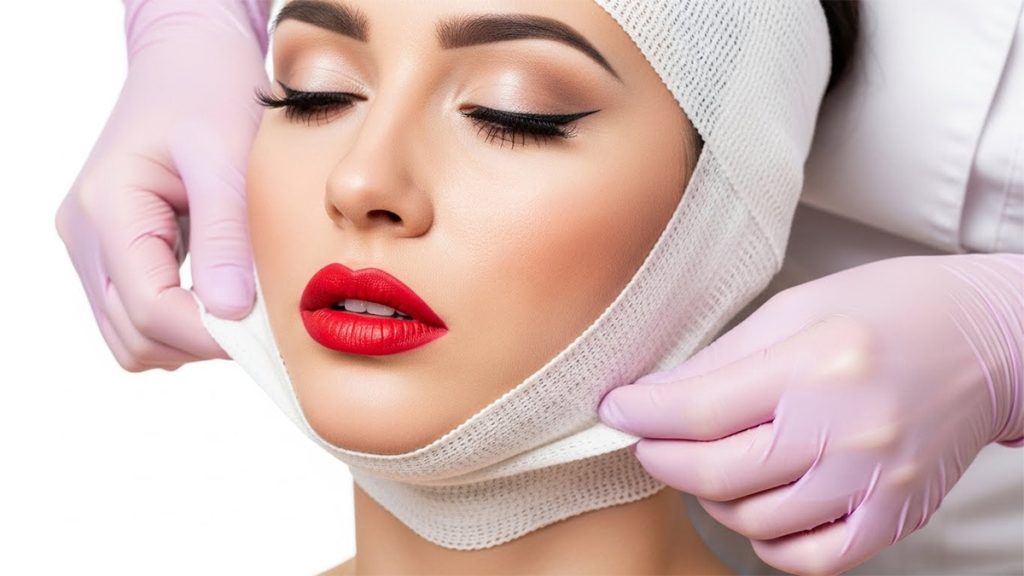
A facelift can be one of the most rewarding plastic surgery procedures, restoring youthful contours and helping women feel vibrant, confident, and aligned with their inner energy. Yet for many patients considering this surgery, there is one question that often lingers: Will I have visible scars?
It’s a natural concern, and one that can sometimes hold women back from pursuing the transformation they desire. While the rejuvenation of a facelift can be life-changing, nobody wants obvious marks that might reveal their choice. The good news is that modern surgical techniques and thoughtful aftercare make it possible to enjoy refined, elegant results with scars that are barely noticeable.
Dr. Thomas Sterry, Board-Certified Plastic Surgeon in New York, NY, has dedicated his practice to helping women achieve natural-looking rejuvenation with careful incision placement and personalized recovery guidance. At his boutique Manhattan office, the emphasis is always on artistry, discretion, and long-term patient satisfaction. This article explains why scars form, how they can be minimized through surgical precision and patient involvement, and what emotional peace of mind comes from knowing your results look as natural as you feel.
Understanding Scars After Facelift Surgery
✓ Why Do Scars Form?
Scars form as part of the body’s natural repair process. When an incision is made, the skin creates collagen fibers to mend the wound. Depending on tension, location, and individual healing patterns, these fibers can sometimes leave behind visible marks. During a facelift, however, the incisions are deliberately placed in areas that naturally conceal them. By situating them along the curves of the ear, within the hairline, or in shadowed areas, an experienced surgeon ensures scars blend in with existing features, often becoming unnoticeable to anyone but the patient herself. Over time, as scars soften and fade, they merge seamlessly with the skin’s texture and tone.
✓ Myths Vs. Reality
Many women are understandably concerned that a facelift will leave scars that are obvious or difficult to hide. This belief often comes from outdated procedures or stories of poorly executed surgeries. In reality, with modern techniques, scars from a facelift can become so discreet that even close family and friends cannot see them. Another misconception is that scars always worsen with age. While older patients may heal more slowly, the truth is that careful incision placement and thorough aftercare help ensure scars remain subtle regardless of age. With a surgeon like Dr. Thomas Sterry in New York, scars are carefully managed from the first surgical planning stages through every step of recovery.
The Role Of Surgical Technique
✓ The Importance Of A Skilled Plastic Surgeon
The visibility of facelift scars is directly tied to the surgeon’s experience and artistry. Every incision must be planned with precision, following natural contours and designed to hide in existing folds. Dr. Thomas Sterry places strong emphasis on techniques such as retrotragal incisions – hidden just inside the curve of the ear – and carefully aligned hairline incisions, which blend effortlessly into surrounding growth. This level of detail requires not only technical knowledge but also aesthetic vision, ensuring that the surgical plan enhances beauty without leaving behind reminders of the procedure.
✓ Minimizing Skin Tension
A major reason scars can become more noticeable is tension on the skin edges during healing. Less experienced surgeons may pull the skin tightly to achieve results, but this places stress on the incision and leads to wider, more visible scars. By contrast, Dr. Sterry performs facelifts that reposition deeper tissues, such as the SMAS layer or through a deep plane approach, so that the lift comes from the structures beneath the skin. With this approach, the skin is redraped gently, without pulling. The outcome is twofold: the results appear more natural, and the scars heal more finely.
✓ Layered Closure And Fine Sutures
The way a surgeon closes the skin after surgery has a profound impact on scarring. A layered closure supports the incision from beneath, taking tension away from the skin’s surface. The outermost layer is then closed with fine, delicate sutures that minimize visible marks. This meticulous process requires patience and attention to detail, qualities that set apart surgeons who are truly committed to minimizing scars. By treating the closure as carefully as the lift itself, Dr. Sterry ensures that healing proceeds smoothly and scars fade gracefully.
The Patient’s Role In Reducing Scars
Pre-Surgery Preparation
Healing well from a facelift begins before the surgery even takes place. Patients can prepare their bodies to heal more effectively by making thoughtful choices in the weeks leading up to their procedure. Avoiding nicotine is crucial, as smoking restricts circulation and deprives tissues of oxygen, both of which are essential for good healing. Nutrition also plays a key role; patients who maintain a diet rich in vitamins, minerals, and proteins provide their bodies with the tools needed for tissue repair. Additionally, sharing a full medical history with Dr. Sterry, including any previous issues with keloids or hypertrophic scars, allows him to develop a prevention plan tailored to each patient’s needs.
Post-Surgery Care
After the procedure, patients continue to influence their healing through careful aftercare. Following post-operative instructions exactly as given is vital to minimizing scars. This includes maintaining incision cleanliness, avoiding unnecessary strain, and applying silicone-based gels or sheets as directed. Protecting the skin from the sun is equally important, as ultraviolet rays can darken scars and make them more noticeable. Many patients find comfort in knowing that by actively participating in their healing process, they can directly influence the quality of their results. Attending scheduled follow-up visits also allows Dr. Sterry to monitor progress and recommend any additional treatments if necessary.
Modern Advances In Scar Reduction
✓ Non-Surgical Treatments To Enhance Healing
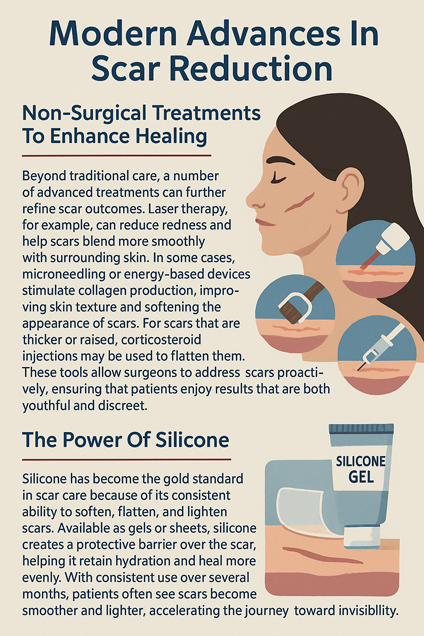
Beyond traditional care, a number of advanced treatments can further refine scar outcomes. Laser therapy, for example, can reduce redness and help scars blend more smoothly with surrounding skin. In some cases, microneedling or energy-based devices stimulate collagen production, improving skin texture and softening the appearance of scars. For scars that are thicker or raised, corticosteroid injections may be used to flatten them. These tools allow surgeons to address scars proactively, ensuring that patients enjoy results that are both youthful and discreet.
✓ The Power Of Silicone
Silicone has become the gold standard in scar care because of its consistent ability to soften, flatten, and lighten scars. Available as gels or sheets, silicone creates a protective barrier over the scar, helping it retain hydration and heal more evenly. With consistent use over several months, patients often see scars become smoother and lighter, accelerating the journey toward invisibility. Dr. Sterry frequently recommends silicone products as part of his comprehensive aftercare protocols.
✓ Customized Care In New York, NY
One of the advantages of choosing Dr. Thomas Sterry in Manhattan is access to customized follow-up care. Rather than providing generic instructions, Dr. Sterry creates individualized plans for each patient, which may include laser treatments, topical therapies, or other interventions as needed. This boutique-level attention ensures that every patient’s healing is optimized. In a bustling city like New York, having a surgeon who offers both artistry in surgery and attentive aftercare provides reassurance and peace of mind.
Emotional Impact Of Scar Appearance
✓ Confidence Beyond The Surgery
The emotional effect of scars is often as significant as the physical one. Women who worry that scars will reveal their facelift may feel hesitant about pursuing surgery, even when they deeply desire rejuvenation. However, with the discreet incision techniques practiced by Dr. Sterry, those fears can be alleviated. Patients are able to step back into their lives with confidence, knowing that their refreshed appearance looks natural and not surgically obvious. The psychological relief of not having to explain or hide scars allows women to fully embrace the joy of their transformation.
✓ The Difference Between Visible And Invisible Scars
There is a dramatic difference between scars that catch the eye and those that remain invisible. Visible scars can distract from otherwise beautiful results, while scars that fade into natural contours allow patients to focus entirely on how youthful and refreshed they look. The ability to enjoy results without constant self-awareness is one of the most powerful benefits of careful scar management, and it is a cornerstone of Dr. Sterry’s approach.
Tailored Approaches For Different Ages
Younger Patients (20s–40s)
Younger women often heal more quickly and with less visible scarring due to strong skin elasticity. Many in this age group require less extensive lifting, which means shorter incisions and faster recovery times. While scars may still form, they tend to be lighter and fade more rapidly.
Middle-Aged Patients (40s–60s)
In middle age, the need for more significant lifting makes incision placement and closure even more critical. Healing may not be as quick as in younger years, but with appropriate aftercare strategies, scars remain subtle. For women balancing busy careers and family lives, the reassurance of discreet scars provides confidence to move forward with their goals.
Mature Patients (60s–70s)
As skin becomes thinner and less elastic, the risk of slower healing increases. However, this does not mean results must come with obvious scars. Dr. Sterry uses especially gentle handling for mature patients and often recommends enhanced aftercare options such as laser therapy or extended silicone use. Even in this age group, scars can be managed effectively, allowing women to enjoy meaningful rejuvenation with confidence.
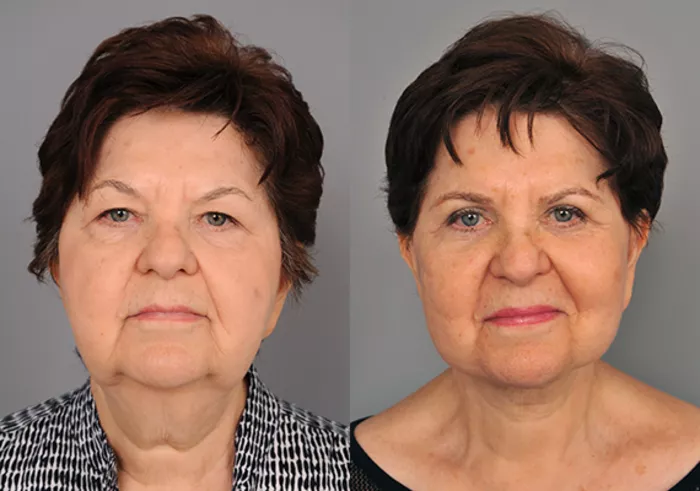
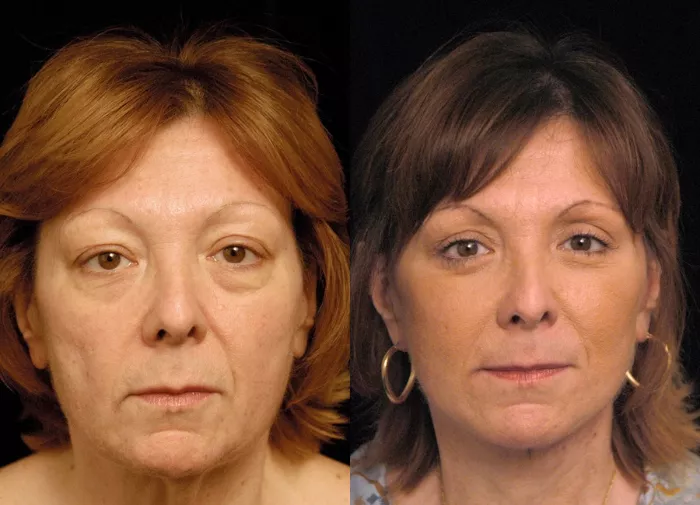
Before and After Facelift Photos
Why Choose Dr. Thomas Sterry In New York, NY
Board-Certified Expertise
Dr. Thomas Sterry is a board-certified plastic surgeon whose reputation rests on precision, artistry, and natural-looking outcomes. With extensive training and years of hands-on experience, he has developed a refined approach that emphasizes both beauty and discretion. His focus on minimizing scars has made him a trusted choice for patients throughout New York and beyond.
Personalized Boutique Care
Unlike larger clinics where patients may feel like just another case, Dr. Sterry’s Manhattan practice offers a boutique-style experience. Each patient receives one-on-one guidance, from surgical planning to long-term scar management. His philosophy is that every incision deserves the same care and artistry as the lift itself, ensuring results that feel both youthful and seamless.
Local Advantage
Being located in the heart of New York, NY, offers patients easy access to advanced care before, during, and after surgery. Whether it’s planning the procedure, attending follow-up visits, or receiving additional treatments to optimize scar healing, patients benefit from the convenience of comprehensive services in one location. This continuity of care makes the healing process smoother and more reassuring.
Do’s And Don’ts For Scar Reduction
Do’s
Patients who follow their surgeon’s aftercare instructions set themselves up for the best possible results. Protecting incisions from sun exposure, using silicone therapies consistently, and attending every follow-up appointment are critical steps in the healing journey. These actions help ensure scars fade smoothly and become nearly invisible over time.
Don’ts
Equally important is avoiding habits that can compromise healing. Picking at or scratching scars may seem minor in the moment, but it can cause long-term damage. Resuming smoking or nicotine use is another mistake that can seriously delay recovery and worsen scarring. Even something as simple as neglecting sunscreen can allow scars to darken, making them more noticeable. Patients who remain mindful of these risks can safeguard their results and protect the artistry of their facelift.
FAQs About Reducing Scars After Facelift Surgery
What happens if I get a facelift in the middle of New York’s humid summer – will the heat affect my scars?
Hot, humid weather does not worsen scars if proper care is taken. Protecting incisions from sweat, bacteria, and sun exposure is key. Many patients in New York choose to schedule facelifts in cooler months, but with strict aftercare, healing can be smooth year-round.
Will people notice scars if I wear my hair up at a Broadway show or rooftop party?
Facelift scars are typically hidden within the hairline and natural folds of the ear. Even with hair pulled up, they are rarely visible. With precise incision placement from Dr. Sterry, patients can wear their hair up with confidence.
If I go jogging in Central Park too soon, could that make my scars worse?
Exercising too early can place unnecessary stress on healing tissue. Patients are advised to avoid strenuous activities, including jogging, until cleared by their surgeon. Returning too soon could cause swelling or irritation at the incision site.
Do scars look different on lighter versus darker skin tones in New York’s diverse population?
Yes, skin tone can influence scar appearance. Darker skin tones may be more prone to hyperpigmentation, while lighter tones may show redness longer. Dr. Sterry tailors aftercare recommendations, including sun protection and topical therapies, to suit each patient’s skin type.
Can the bright city lights of Manhattan make fresh scars more noticeable?
Artificial light does not worsen scars, but it can highlight redness in the early stages of healing. This is temporary and typically improves as scars mature and fade.
What if I am photographed at an event or work function shortly after surgery – will scars show on camera?
Modern cameras can pick up small details, but with makeup and careful incision placement, scars are often imperceptible. Many patients are surprised by how quickly they feel camera-ready again.
Is it true that stress from living in a fast-paced city like New York could affect how my scars heal?
Stress can impact healing, as it may interfere with sleep, nutrition, and immune function. While the city’s pace can be demanding, patients who prioritize rest, follow care instructions, and allow time for recovery usually experience excellent healing.
Call To Action
Facelift surgery offers the opportunity to look as youthful and energetic as you feel, and with today’s advanced techniques, scars no longer need to be a source of concern. Dr. Thomas Sterry, Plastic Surgeon in New York, NY, combines meticulous surgical planning, precision techniques, and personalized aftercare to deliver results that are natural and discreet. His dedication to artistry ensures that scars fade into the background, leaving behind only a refreshed, rejuvenated appearance.
If you are ready to embrace the benefits of a facelift without the worry of visible scars, it is time to take the next step. Contact Dr. Sterry’s Manhattan practice today to schedule a private consultation and discover how you can achieve the elegant, natural results you deserve – results that highlight your beauty while keeping scars hidden from view.
Further Reading
- Read more about Scar Revision
- Read more about Deep Plane Facelift
- Read more about Naturalift™ Mini Facelift
- Read Dr Sterry’s Blog on Scar Removal: Advice From a New York City Plastic Surgeon
- Read Dr Sterry’s Blog on 5 Facelift Myths You Might Believe (Updated 2024)
- Read Dr Sterry’s Blog on Don’t all Facelifts look fake?
Medical References
- A regenerative refresh to cosmetic procedures. Mayo Clinic. https://newsnetwork.mayoclinic.org/discussion/a-regenerative-refresh-to-cosmetic-procedures/
- Laser resurfacing. Mayo Clinic. https://www.mayoclinic.org/tests-procedures/laser-resurfacing/about/pac-20385114
- Face-lift. Mayo Clinic. https://www.mayoclinic.org/tests-procedures/face-lift/about/pac-20394059
- Brow lift. Mayo Clinic. https://www.mayoclinic.org/tests-procedures/brow-lift/about/pac-20393257
- Cosmetic surgery. Mayo Clinic. https://www.mayoclinic.org/tests-procedures/cosmetic-surgery/about/pac-20385138
- Facial Plastic and Reconstructive Surgery – Overview. Mayo Clinic. https://www.mayoclinic.org/departments-centers/facial-plastic-and-reconstructive-surgery/overview/ovc-20425011
- Blepharoplasty. Mayo Clinic. https://www.mayoclinic.org/tests-procedures/blepharoplasty/about/pac-20385174

Leave a Reply