

Dr Thomas Sterry, Plastic Surgeon in New York, NY, understands how vital movement is to his patients. New Yorkers prize energy, momentum, and routine, and they want clear answers about when to move again after a brow lift. Dr Sterry favors a calm and confident plan that protects results while respecting the pace of Manhattan life.
In this guide, Dr Thomas Sterry outlines a staged approach to exercise so patients can feel like themselves again without risking swelling, discomfort, or setbacks. Throughout the article, Dr Sterry shares realistic timelines, carefully explained checklists translated into plain language, and New York specific tips that fit busy schedules. The purpose is simple and reassuring – keep your progress safe while you rebuild strength, ease, and confidence day by day.
Why Exercise Guidance Matters After A Brow Lift
✓ The Nature Of A Brow Lift
A brow lift elevates and stabilizes the brow so the upper face looks refreshed and open. Incisions are usually hidden in or just behind the hairline to preserve a natural look. Some procedures are endoscopic with small openings and a camera for limited dissection and precise lifting. Others are open with longer access that allows direct visualization and tailored adjustments. Patients can expect early swelling, some bruising, and a feeling of tightness that settles as tissues heal. A steady, sensible plan for movement helps the body manage fluid shifts, protects the fine work performed in surgery, and supports a smooth transition back to daily life.
✓ What Exercise Changes In The Early Weeks
Exercise raises heart rate and blood pressure. Fresh tissues are sensitive to those changes because new capillaries are fragile and the surgical area is adapting to a new position. High impact moves and heavy strain can increase swelling and discomfort, and sudden spikes in pressure can stress small vessels. The goal is not to stop moving. The goal is to choose the right type and the right pace for the first weeks so the skin and deeper support layers can knit securely while circulation remains steady.
✓ Mindset For An Active Recovery
Consistency matters more than intensity. Short sessions count, especially when they are repeated throughout the day. Small wins add up, and that rhythm builds confidence. Dr Thomas Sterry encourages a stepwise approach that keeps patients in control. He helps them tune into signals like facial relaxation, even breathing, and morning swelling patterns so they can make thoughtful decisions about the next workout. With this mindset, recovery feels collaborative and patient centered.
Guiding Principles From Dr Thomas Sterry In NYC
✓ Start Light And Start Early
Gentle walking begins soon after surgery as directed by the practice. Keep the head supported and the posture upright. Focus on circulation, comfort, and calm breathing. Avoid any effort that makes the forehead tense or the brows lift. This is the foundation – simple movement, steady breath, and patience.
✓ Progress With Purpose
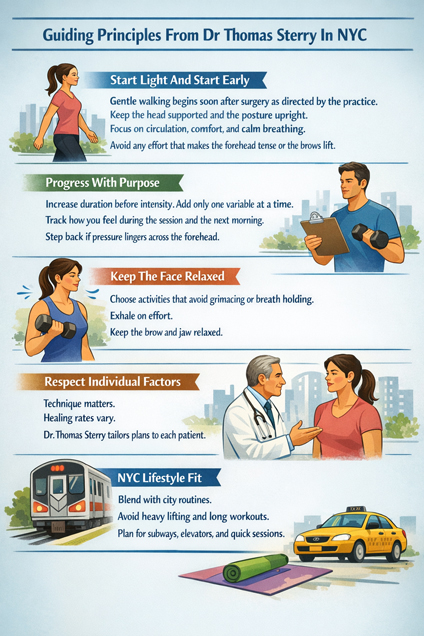
Increase duration before intensity. Add only one variable at a time. Change speed or resistance or load, not all at once. Track how you feel during the session and again the next morning. If swelling resolves quickly and energy feels stable, keep building. If pressure lingers across the forehead, step back for a day. Purposeful progress makes recovery predictable.
✓ Keep The Face Relaxed
Choose activities that do not encourage grimacing or breath holding. Exhale on effort. Keep the jaw soft and the brows relaxed. Imagine the forehead resting while the rest of the body works. If a movement pulls the face tight or tempts a Valsalva breath, choose a different option that preserves facial ease.
✓ Respect Individual Factors
Technique matters. Endoscopic and open approaches may heal at different paces. Combined procedures can extend the timeline because more than one area is adapting at once. Age and baseline fitness also play a role. Dr Thomas Sterry reviews progress at follow up and personalizes approvals so each step fits the person, not a generic schedule.
✓ NYC Lifestyle Fit
Plans should work with commuting and daily routines. New Yorkers juggle elevators, subways, ride shares, and boutique classes. Smart scheduling avoids crowds, limits carrying, and favors short, frequent sessions over marathon workouts. When recovery tips blend with city habits, patients follow the plan with less friction and better results.
Week By Week Return To Exercise Timeline
✓ Days 0 To 3 – Reset And Recovery
The priority is rest, comfort, and gentle circulation. Take very short indoor walks several times a day to keep blood moving without provoking strain. Practice calm diaphragmatic breathing and ankle pumps. Keep the head elevated when resting to help swelling drain. Avoid lifting, bending below the waist, and any heat exposure that might dilate vessels. Nourish the body, sip fluids, and let friends or family help with chores so the face can settle.
✓ Days 4 To 7 – Gentle Mobility
Add easy neighborhood strolls or slow treadmill walking if approved. Use the talk test to stay within a comfortable effort – if you can speak in full sentences, the pace is right. Avoid sweaty workouts, hot environments, and any movement that places the head below the heart. Carry only light bags and keep strides smooth. Morning swelling should trend down and color should fade. If either stalls, shorten sessions and choose flatter routes.
✓ Week 2 – Low Impact And Low Load
Build routine without strain. Choose flat terrain and walk for 20 to 30 minutes, once or twice a day if energy allows. Add simple lower body movements like sit to stand, heel raises, and mini squats using a stable surface for balance. Use very light resistance bands for the arms if the face stays relaxed and the breath remains even. For the core, use gentle options like marching bridges and dead bug variations that teach control without pressure. Avoid running, HIIT, cycling sprints, heavy weights, and anything that provokes facial tension. Keep sessions pleasant and stop before fatigue sets in.
✓ Weeks 3 To 4 – Build The Base
Expand options while protecting healing tissues. Try the elliptical or a stationary bike at low resistance and steady cadence. Continue brisk walking with attention to posture. Increase strength gradually with light to moderate loads for the legs, using smooth tempo and full control at the top of the movement. Use very light dumbbells for the arms if the forehead remains relaxed and the jaw stays soft. Choose head up yoga or Pilates and avoid positions with the head below the heart. Swelling should fade more quickly after sessions and sleep should feel refreshing. If puffiness lingers in the morning, trim duration first and reassess.
✓ Weeks 4 To 6 – Stronger Yet Smart
Move into moderate cardio with careful progression. Add jog walk intervals on soft surfaces or steady cycling as tolerated. In strength sessions, use progressive sets at moderate intensity and avoid breath holding by linking the exhale to the effort phase. For classes, ask for modifications that remove overhead straining, long prone positions, and rapid transitions that could increase pressure in the face. Keep posture tall, breath steady, and face relaxed. Recovery days matter now – space sessions so tissues can rebound fully.
✓ Six Weeks And Beyond – Personalized Green Light
Many patients resume full routines after clearance. This can include running programs, heavier strength training, and more dynamic classes that challenge agility and power. If procedures were combined, expect a slower ramp up and continue to prioritize facial relaxation and breathing technique. Dr Thomas Sterry provides tailored guidance so each person returns to her personal best at the right pace. The investment in patience pays off with comfort, consistency, and results that look natural.
What Too Much Too Soon Looks Like
✓ Signs To Scale Back
Swelling that lasts into the next morning is a classic sign to ease up. Throbbing or pulsing with activity means the session was too strong for the moment. New areas of firmness or one sided swelling also signal the need to reduce effort. These signs are information, not failure, and they help shape the next step.
✓ Smart Adjustments
Shorten sessions first. Then lower intensity by choosing easier gears, lighter loads, or a slower cadence. Swap high impact cardio for low impact choices such as the elliptical or a flat outdoor loop. Insert an easy day between sessions during weeks two to four to restore balance. Keep notes so you can see trends and respond quickly.
✓ When To Contact The Office
Call if swelling increases rapidly or if tenderness seems unusual. Reach out for any concerning change, including sudden asymmetry or pressure that does not settle with rest. Dr Thomas Sterry and his Manhattan team prefer early calls. Fast guidance prevents setbacks and protects results, especially in the first month.
NYC Specific Recovery Tips
✓ Central Park And Riverside Walks
Flat and scenic paths make early walks enjoyable and safe. Choose quieter hours to avoid crowds, like mid morning on weekdays or later afternoons when the park is calmer. Focus on upright posture, soft arms, and a gentle pace. If wind is brisk, pick sheltered routes near tree lines or buildings. The goal is movement that feels refreshing, not draining.
✓ Commuting Without Overdoing It
Use elevators instead of stairs during the first two weeks and let escalators do the work. Plan routes that minimize transfers and long corridors. Choose a light cross body bag to keep hands free and posture balanced. If you ride the subway, aim for off peak times and keep a small buffer in your schedule so you are never tempted to rush. Small adjustments make daily travel easier and more comfortable.
✓ Boutique Fitness Re Entry
Share your recovery status with instructors and ask for head up modifications in Pilates and yoga. In strength studios, avoid loaded overhead presses through week four and substitute lighter movements that keep the neck long and the face relaxed. Dr Thomas Sterry recommends alignment and control over intensity during this phase so you rebuild skill and confidence together. Clear communication helps your coaches support you well.
✓ Home Setup In Small Spaces
A yoga mat and a set of light bands are enough for early sessions. Create a calm corner with good airflow and a supportive chair for rest between sets. Keep a water bottle and a small towel within reach so you are not bending or twisting to grab essentials. Gentle mobility routines fit well in NYC apartments and help build consistency without travel time.
Tailored Advice By Age And Activity Level
✓ Ages 20 To 30
Energy is high and motivation is strong, which is a great asset when guided well. Patience prevents problems by giving tissues time to adapt. Replace HIIT with steady walking and light circuits until cleared and use music or podcasts to make pace control enjoyable. Keep expectations realistic and let comfort lead the way so progress feels sustainable.
✓ Ages 40 To 50
Work and family demands can make rest tricky. Use short movement snacks of 10 to 15 minutes to keep momentum without fatigue. A standing desk, gentle stretch breaks, and brief walks during the day all support recovery. Focus on posture and breathing to support comfort at the office and at home. Plan workouts on the calendar the way you would any important meeting so they are protected but flexible.
✓ Ages 60 To 70
Prioritize balance, posture, and joint friendly exercise. Review blood pressure and medications with your primary doctor if you plan to return to higher intensity work. Choose low impact options like walking, cycling with light resistance, or water based movement when available. Build gradually and give yourself permission to rest more often early on.
✓ Highly Active Or Athletic Patients
Create a measured ramp up with clear checkpoints. Track perceived exertion and next day comfort to verify that the plan fits. Expect a longer base building phase before performance training resumes. Quality matters more than speed and smart pacing preserves results while protecting enthusiasm.
Do’s And Don’ts For Working Out After A Brow Lift
Do’s
Walk every day as directed and keep early sessions short and comfortable. Sleep with the head elevated during the first days to encourage steady fluid movement. Exhale on effort to avoid breath holding and choose low impact cardio first. These habits protect healing and build confidence as stamina returns.
Don’ts
Do not lift heavy in the early weeks and do not run, sprint, or jump until cleared. Do not use saunas, steam rooms, or hot yoga early on. Do not perform inversions or long head below heart positions and do not strain or grimace during exercise. These limits are temporary and they safeguard the result you invested in.
Comfort, Sleep, And Swelling Management
The Role Of Head Elevation
Use pillows or a wedge to keep the head elevated at rest. This reduces pressure, encourages drainage, and supports comfort. Visiting patients who stay in hotels can ask for extra pillows to create a supportive setup. Set a relaxing routine in the evening so sleep is deep and unbroken – a dark room, cool temperature, and a quiet playlist can all help the face feel calm the next morning.
Cool Compresses And Timing
Short and regular intervals help during the first 48 to 72 hours as advised by the practice. Combine rest, hydration, and gentle walking to keep swelling under control. Watch the mirror for cues and adjust activity if puffiness lingers. A simple rhythm of compress, elevate, and stroll keeps comfort steady.
Clothing And Gear
Choose front zip tops to avoid overhead pulling and select soft fabrics that glide over the hairline. Use soft headbands only when approved and never over fresh incisions. Comfortable footwear supports posture and encourages longer walks without effort. Pack a lightweight layer when you go outside so you can regulate temperature quickly.
Combining Procedures And How Timelines Shift
✓ Brow Lift With Upper Eyelid Surgery
Expect a more conservative progression in weeks one to three because both areas are adjusting. Keep positions head up and limit strain. Choose low impact cardio and gentle mobility until both areas feel settled and your surgeon confirms readiness to move forward.
✓ Brow Lift With Face Or Neck Lift
Plan for extended limits on strain and heat exposure because the surgical field is broader. Build movement in shorter sessions and favor activities that keep the spine long and the head neutral. Dr Thomas Sterry provides individualized clearances during follow up visits so the plan matches the scope of your procedure.
✓ Scheduling Strategy For Active Patients
Consider seasonality in New York, NY. Heat and humidity add stress and can amplify swelling. Holidays and work cycles can also influence timing. Align your calendar with recovery phases so the process feels smooth and manageable. A thoughtful schedule reduces pressure and boosts confidence.
Tracking Progress Without Overthinking
✓ Simple Metrics That Matter
Comfort, swelling trend, and sleep quality are practical markers that tell the truth about readiness. The talk test keeps effort honest during cardio. Facial relaxation cues tell you when to pause during strength work. These simple checks guide smart decisions without creating anxiety.
✓ Using Wearables Wisely
Set heart rate alerts to keep early sessions easy. Use step counts as gentle goals and celebrate consistency more than numbers. Avoid chasing streaks during recovery. Patience now pays off later when you are fully cleared to train.
✓ A One Page Exercise Log
Keep a short record of date, activity, duration, effort, and next day notes. Patterns appear quickly, and adjustments become obvious. The log makes conversations at follow up visits easy because you can describe exactly what worked and what you changed.
Voice Of The Surgeon – Confidence, Not Hurry
A Note From The Practice
Dr. Thomas Sterry is known for his meticulous attention to every stage of a patient’s journey – not just in the operating room, but especially throughout recovery. He views true craftsmanship as extending beyond surgical technique to how gracefully the results settle and appear in everyday life. His approach encourages patients to take pride in steady, intentional progress. The ultimate goal is a naturally refreshed appearance – one that looks like the very best version of you, and moves effortlessly with every expression.
How His Team Supports Patients In Manhattan
The Manhattan team offers quick check-ins and clear milestones. Questions about activity receive fast answers and practical examples. The support is warm and efficient, and patients feel guided at every step. That partnership makes returning to movement feel safe and encouraging.
Logistics For New Yorkers
✓ Getting Around The City In Early Recovery
Plan transportation that reduces effort. Ride share is helpful for longer trips. The subway is fine when crowds are light and you can find a seat. Avoid rush hours during the first two weeks when possible and give yourself extra time between commitments. The absence of rushing is a gift to healing tissues.
✓ Returning To Work
Desk based roles benefit from a gentle on ramp with walking breaks every hour. Client facing roles may want wardrobe and hairline strategies that reduce attention to the forehead such as soft side parts and light scarves. A little planning boosts confidence on day one back and helps colleagues focus on your work, not your recovery.
✓ Choosing The Right Time For Your Procedure
Seasonal weather in New York, NY can influence comfort. Summer heat and humidity can increase swelling, while colder months often support calmer recovery walks and wardrobe options that conceal swelling. Many patients schedule during slower work seasons or school breaks to create space for a steady return to routine.
Frequently Asked Questions About Exercise After A Brow Lift
Can Lower Body Strength Training Still Increase Swelling In The Brow Area After Surgery?
Yes. Heavy lower body lifts can create full body strain even when the face is not directly involved. This strain can lead to breath holding and temporary spikes in blood pressure, which may increase swelling or pressure sensations across the brow during early recovery. Keeping leg workouts light, controlled, and well paced helps protect healing tissues.
Is It Safe To Walk Outdoors In Cold New York Weather After A Brow Lift?
Outdoor walking is generally safe when sidewalks are clear and footing is secure. Cold air itself does not harm healing tissues, but wind and rushing can increase facial tension. Choosing sheltered routes, wearing protective eyewear, and keeping a relaxed pace allows patients to enjoy fresh air without stressing the brow area.
How Should Sweat, Skin Care, And Showering Be Managed When Exercising After A Brow Lift?
Light perspiration is expected as activity increases. Gentle cleansing with lukewarm water is recommended, while very hot showers should be avoided early on. The hairline should be patted dry rather than rubbed, and tight headbands should be avoided until cleared by the practice.
What Should I Do If I Accidentally Overdo Exercise During Brow Lift Recovery?
If exercise feels like too much, it is best to pause for one to two days and return to gentle walking only. Resting with the head elevated, staying hydrated, and using cool compresses as instructed often helps swelling settle quickly. Any concerning changes should prompt a call to the office for reassurance and guidance.
When Is It Safe To Wear Hats, Headphones, Or Helmets After A Brow Lift?
Soft hats that do not touch incision areas may be allowed earlier, but timing varies. Over ear headphones and helmets place pressure on the scalp and hairline and should only be worn after Dr Thomas Sterry confirms it is safe. Comfort and lack of pressure are key indicators.
Do Screen Time And Posture Affect Recovery After Exercising Following A Brow Lift?
Yes. Prolonged forward head posture after workouts can increase blood flow toward the face and worsen swelling. Maintaining upright posture, keeping screens at eye level, and taking posture breaks help swelling resolve more predictably.
Can Travel And Hotel Gym Workouts Be Safely Done During Brow Lift Recovery?
Short trips are often possible once approved by the practice. When using a hotel gym, low impact machines and conservative intensity are recommended. Saunas and steam rooms should be avoided, and travel plans should always be discussed with the office in advance.
Schedule Your Brow Lift Consultation In New York, NY
Ready to plan a brow lift and a smart return to movement in New York, NY. Request a consultation with Dr Thomas Sterry. His Manhattan practice welcomes women from across New York City and the tri state area. Share your fitness habits, timelines, and goals. Dr Thomas Sterry will create a personalized exercise roadmap that protects your results and helps you feel like yourself again.
Further Reading
- Read more about Forehead Lift (Brow Lift) Procedure
- Read more about Brow Lift Vs Eyelid Surgery
- Read more about Refresh Your Eyes With Upper Blepharoplasty
- Eyelid Surgery (Blepharoplasty) Procedure Page
Medical References
- Endoscopic Brow Lift: Techniques and Outcomes – https://www.ncbi.nlm.nih.gov/pmc/articles/PMC4444474/
- Brow Lift Surgery: A Comprehensive Review – https://www.ncbi.nlm.nih.gov/pmc/articles/PMC5500191/
- Endoscopic Brow Lift: A Personal Review of 538 Patients and Comparison of Techniques – https://pubmed.ncbi.nlm.nih.gov/11252090/
- Postoperative management after facial rejuvenation surgery – https://pubmed.ncbi.nlm.nih.gov/20422923/
- Complications in Brow Lift: A Systemic Review – https://pubmed.ncbi.nlm.nih.gov/30817639/
- Cleveland Clinic: Brow Lift Procedure and Recovery – https://my.clevelandclinic.org/health/treatments/11021-brow-lift

Leave a Reply