

As both a plastic surgeon and (in a previous life) a personal trainer with a master’s degree in exercise physiology, I have learned quite a bit about the muscles that make up the abdominal wall. Many patients come to me and are upset that they can’t get their tummy flat again after childbirth. Some of their friends look great after having kids, and they don’t understand why they can’t get their physique back too. Some of them develop feelings of guilt or incompetence, which are completely unfair. Often, it’s not their fault, as they may have a condition called diastasis recti. Fortunately, we can usually address their concerns with a tummy tuck that includes diastasis repair.
In this blog post, I’d like to explain why some women can’t restore their pre-pregnancy bodies on their own and why exercise and diet will NOT help you overcome true diastasis recti completely. I’ll also show some diastasis repair before and after pictures so you can see what the procedure can accomplish.
Contents
What is diastasis recti?

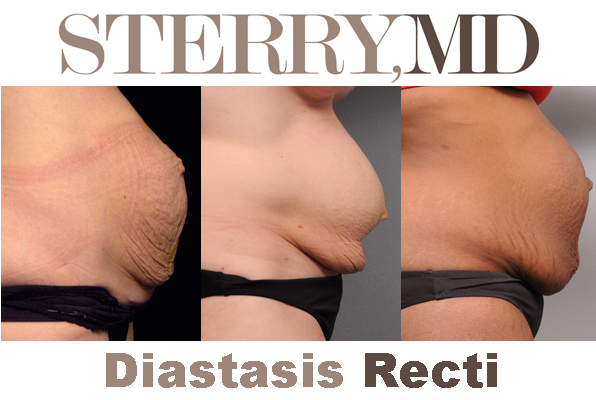
Diastasis recti is a condition that arises when the rectus abdominis muscles separate; up to two-thirds of pregnant women experience the condition. To visualize diastasis recti, imagine the vertical space between the muscles widening.
In the majority of cases, the condition treats itself in the weeks and months following childbirth. But for some, the condition doesn’t go away on its own. Women with diastasis recti often report looking pregnant even if they aren’t. Others describe a bulge or ridge protruding from the center of the abdomen.
Let me emphasize that diastasis recti is an unusual circumstance and MOST women simply develop laxity of their abdominal wall after pregnancy. While this, too, can be frustrating, it is NOT the same as diastasis recti.
How do you know if you have diastasis recti?
While diastasis recti is not typically painful, it can be associated with the following symptoms:
- Constipation
- Back pain
- Occasional urinary incontinence that will require incontinence treatment.
The site Pregnancy, Birth & Baby offers additional tips for determining whether you may have diastasis recti.
Women with a real separation of the abdominal wall muscle have a very specific appearance and look very much like each other. There is almost always a profound protuberance near the umbilicus and hanging skin below that. With poor diet and lack of exercise or with many post-pregnancy tummies, the excess skin and the belly paunch are both lower and might even hang down, but they tend to be together. Not so with a diastasis recti. So, what exactly is going on here?

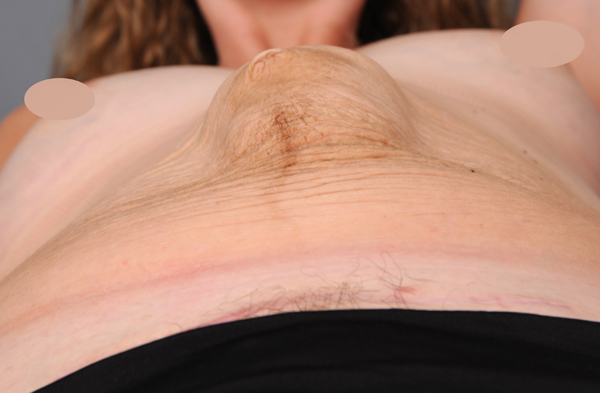
“Diastasis recti” is a loosening of the connective tissue in the center of the abdomen called the “linea alba.” This is a fascial band (thick tissue) that connects the right and left rectus abdominus muscles (they make up the “six-pack”). It’s responsible for the visible groove that many slim people have running from the umbilicus up to the chest.
During pregnancy, prostaglandins circulate through the body and allow everything to dilate, stretch, and get loose to accommodate the growing baby. This includes the uterus, blood vessels, and yes—the abdominal wall (including the linea alba). During the first year post-pregnancy, many of these structures snap back, and the woman gets her old shape back. But this isn’t true for everybody. Some women end up with loose tummy skin, sagging breasts, larger nipples, or a widened space between their rectus abdominus muscles—and this is what we call the diastasis recti.
So, for women with diastasis recti, the abdominal muscles remain separated widely by several inches creating the appearance that they have a potbelly. In some instances, it looks more like a large hernia. In some rare cases, I have seen the small intestine wiggling around under the skin (a process called “peristalsis”) as if there were a snake below wandering through the tummy. With the right kind of muscle flexion, the belly may even stick out as if there were a hernia present.
How to fix diastasis recti
The preferred way to fix diastasis recti is via a tummy tuck incision because it results in a hidden scar. The incision can be performed in a standalone abdominoplasty procedure or as part of a mommy makeover.
In an effort to be more “stealthy,” I can make an incision across the lower tummy in the bikini line. I then undermine the skin of the abdomen to expose the separated muscles and run sutures from one side across to the other like a shoelace. This creates a sort of internal corset. By repositioning the muscles back in the middle of the tummy, we effectively restore normal anatomy and eliminate the bothersome bulge. You can read more about tummy tuck procedures in this related blog post.
Before and After Photos

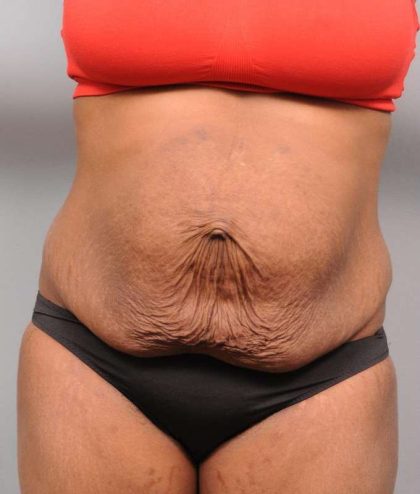


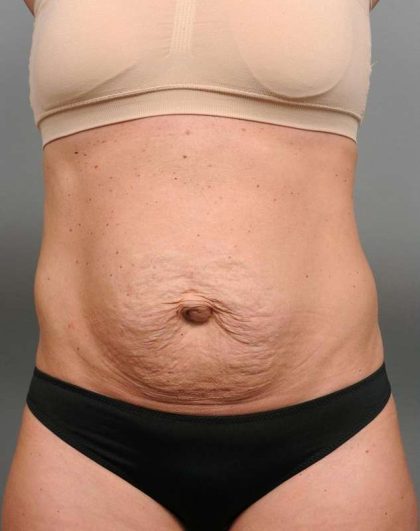
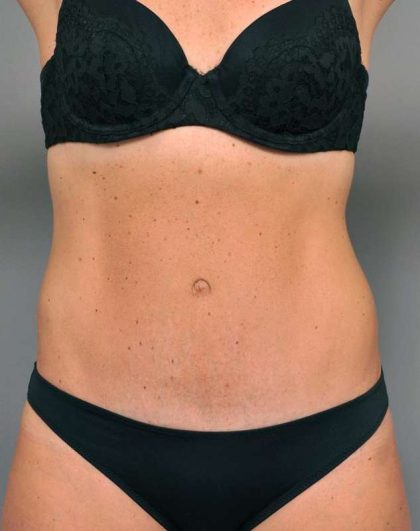

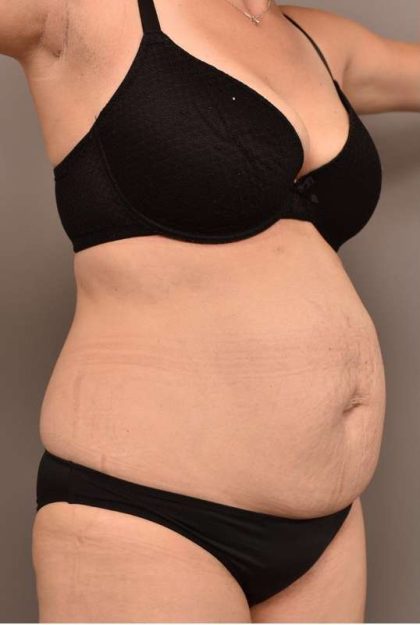
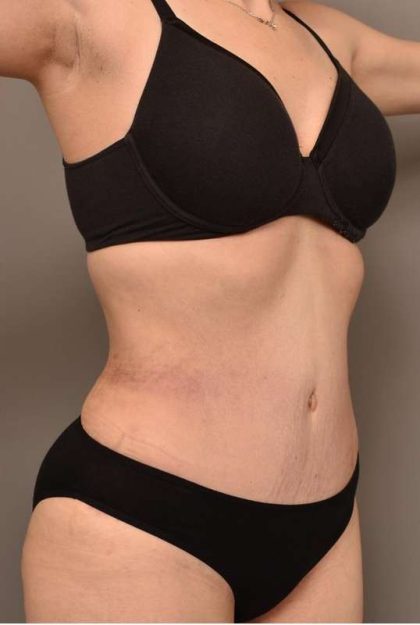

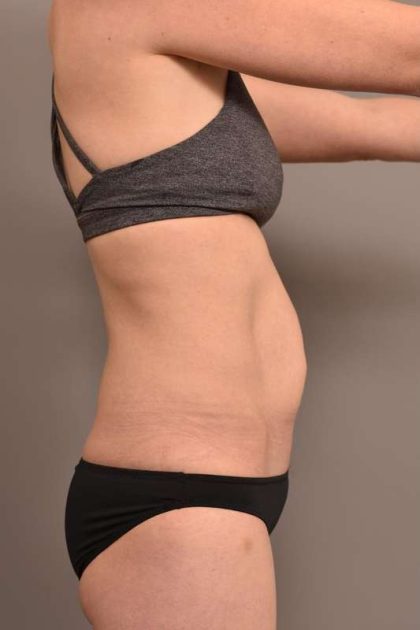
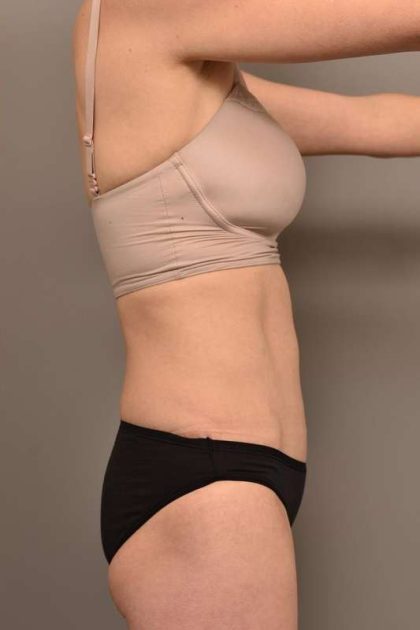
Repair of diastasis recti is typically performed during a tummy tuck. These are photos of some of Dr. Sterry’s real patients before and after tummy tuck surgery and diastasis repair.
What’s the cost of diastasis recti surgery?
The cost os diastasis recti surgery varies depending on the amount of correction necessary and other unique factors. For women who are ready to address the problem, we can provide an estimate of your specific tummy tuck cost after your consultation. We also offer financing through CareCredit so that the procedure is more easily affordable.
Why won’t ab exercises for diastasis recti work for me?
As a previous personal trainer, I’m a huge believer in physical fitness and an advocate for anyone who believes in self-reliance. That said, I’m also a realist and an advocate for patients, and this problem needs surgery. There are no two ways about it. It is no different than having a bone broken completely in half so that it is not lined up properly. Unless it is put back in place, it can’t possibly heal in a straight line the way it was before.
In the case of diastasis recti, the muscles need to be put back in their proper place in order to restore normal function. If that doesn’t happen, then no matter how strong you might make them with exercise, they will remain separated from each other, and you will always have that bulge emerge between them.

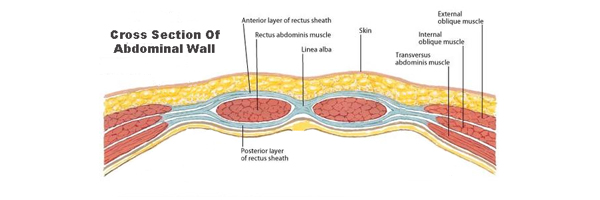
I have noticed recently that there are some charlatans (yes, I believe these are dishonest people) out there claiming that if you do their workout (for a fee) they will help you build up your “transversus abdominus” muscles to fix your diastasis recti. They claim to have published proof in medical journals that their techniques work. I encourage anyone to try whatever methods are available. You should ALWAYS try to avoid surgery if you can. However, if your diastasis doesn’t get better in the first 18 months after pregnancy, it’s not likely to improve on its own. Perhaps it was never a real diastasis to begin with, but just some laxity that rebounds with hormonal changes after pregnancy.

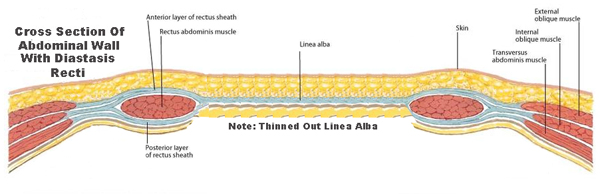
How do I know this? First, let’s start with basic ideas and then move into anatomy. When a muscle flexes, it gets shorter and pulls whatever is attached to it closer. The anterior abdominal wall (your belly) is made up of four muscles all running in different directions. Importantly, NONE of them cross the midline or flex from one side to the other. They all run their course on either the right or the left sides of the belly. There is no connection between the right and left except for the fascia in the midline—which is what gets loose in a diastasis recti scenario. Therefore, strengthening these muscles cannot pull the two sides of the abdomen together. In fact, it might only serve to pull them farther apart.
The second way I can prove this is by experience in the operating room. Have a look at the photo on the right of the very thin and attenuated connective tissue between the two major abdominal muscles in this patient. There is no exercise in the world that would strengthen this layer because there is no muscle in it.
Laxity of the abdominal wall: when is it not diastasis recti?
More common than diastasis recti is a laxity of the abdominal wall after pregnancy or after major weight gain and loss. In these cases, the abdominal muscles are all intact, but the connective tissues have become lax, leaving the tummy to protrude more than it did before pregnancy. This situation is often a surgical problem, even for slender people, but it typically doesn’t have the dramatic presentation that diastasis recti does. Certainly, many of these folks will end up getting tummy tucks, and they probably look much better than they would without the surgery, but the anatomical problem is not at all the same.
If you want to address loose or bulging tummy skin, a tummy tuck may help. Call my New York office at 646-904-5584 to schedule an appointment, or use our online form to request a consultation.
FAQ
When is it too late to fix diastasis recti?
It’s never really “too late” to address diastasis recti. Many women notice improvement naturally in the first few months after childbirth as the body heals on its own. However, if the separation persists, treatment options are still available—even years later. Nonsurgical therapies may help in some cases, while surgery such as a tummy tuck can provide a long-term solution by repairing and tightening the abdominal wall.
What happens if diastasis recti is left untreated?
For some people, untreated diastasis recti may cause only a visible bulge in the abdomen. In more significant cases, though, the separation can contribute to complications such as hernias, constipation, back pain, urinary leakage, painful intercourse, and ongoing core weakness. If symptoms begin to affect your daily comfort or quality of life, it’s a good idea to seek medical advice about treatment options.
Can a tummy tuck fix diastasis recti permanently?
Yes. A tummy tuck with muscle repair brings the separated abdominal muscles back together using sutures. When combined with the removal of excess skin and fat, this procedure can provide long-lasting correction—and in many cases, the results are permanent. Maintaining a stable weight and avoiding future pregnancies are key to preserving your outcome. To learn what’s possible, read my comprehensive blog post regarding abdominoplasty and view actual patient tummy tuck before and after photos.